

PA Speaker Systems
Acoustic Design · SPL · Coverage Testing
Ceiling, horn, column, and line‑array speakers. Acoustic coverage design, SPL testing, and STI measurement for clear, intelligible announcements. Pan‑India.
Line Array · Outdoor IP66
STI Measurement · Modelling
Analogue · IP‑Networked
Outdoor · Cleanrooms · Atriums
Trusted by 30+ enterprises across India





Complete PA Speaker Infrastructure
From design and selection to installation and testing – all delivered in‑house, pan‑India.

Ceiling Speakers
Flush‑mount ceiling speakers for offices, lobbies, corridors, and open‑plan areas. 6‑8W to 20W, 100V line, with back cans for fire rating.

Horn Speakers
High‑output, directional horn speakers for factories, warehouses, and outdoor areas. Weatherproof IP66, 15‑50W, long‑throw sound.

Column Speakers
Slim, vertical column speakers for high‑clarity speech in atriums, halls, and transit areas. Wide vertical coverage, aesthetic design.

Line Array Speakers
Vertical line arrays for large spaces – auditoriums, atriums, and worship venues. Controlled directivity, even SPL distribution.

Acoustic Coverage & SPL Design
Acoustic modelling with EASE or similar – speaker placement, coverage mapping, SPL calculations, and STI prediction for intelligibility.

Outdoor & Weatherproof Speakers
IP54 and IP66 rated speakers for outdoor areas, parking lots, sports grounds, and industrial yards. UV‑resistant and corrosion‑proof.
Why Enterprises Trust Our
Speaker Installation Engineers
Speakers are not just about volume – they're about clarity, coverage, and intelligibility. We design systems that ensure every word is heard clearly in every corner of your facility, whether it's a quiet office or a noisy factory floor.

Acoustic‑Design‑First
Speaker coverage, SPL, and STI are modelled before a single speaker is mounted – ensuring clarity and compliance.
Zero Subcontracting
Every speaker installation is performed by our own engineers – no third‑party AV subcontractors.
100V Line & Low‑Impedance Expertise
We design and install both 100V line (PA) and low‑impedance systems – selecting the right topology for each zone.
Vendor‑Agnostic
We work with TOA, Bosch, QSC, JBL, Yamaha, and others – we recommend the right speaker, not a forced brand.
Full Documentation
Coverage maps, SPL test reports, STI measurements, and wiring diagrams – all delivered at handover.
AMC with Acoustic Re‑Testing
Annual maintenance contracts with STI re‑testing, SPL verification, and 12×6 break‑fix support.
From Design to Deployment in 6 Steps
Needs & Site Assessment
Walk the site, measure ambient noise, define coverage areas, and understand fire/regulatory requirements.
Acoustic Modelling & Speaker Selection
Use EASE modelling to map coverage, select speaker types and wattages, and design mounting locations.
Cable & Infrastructure Planning
Plan 100V line or low‑impedance cabling, speaker runs, and rack integration.
Installation & Mounting
100% in‑house team. Mounting, termination, and cable dressing – ensuring correct tap settings.
Testing & Calibration
SPL measurement, STI testing, and system calibration – adjust for room acoustics and ambient noise.
Handover & Documentation
Deliver coverage maps, test reports, and user guides for facility and maintenance teams.
Speaker Type Selection – Which One Do You Need?
| Speaker Type | Best For | Key Features | Typical Wattage |
|---|---|---|---|
| Ceiling | Offices, lobbies, corridors | Flush‑mount, wide dispersion, fire‑rated | 6‑20W |
| Horn | Factories, warehouses, outdoors | High output, IP66, long‑throw | 15‑50W |
| Column | Atriums, halls, transit areas | Slim, aesthetic, high clarity | 20‑100W |
| Line Array | Auditoriums, large atriums | Controlled directivity, even coverage | 100‑500W+ |
*Layerix recommends the right speaker type based on space, acoustics, and user requirements.
Real Speaker Deployments
Live speaker installations across Karnataka and Tamil Nadu – corporate offices, factories, hospitals, and educational campuses.
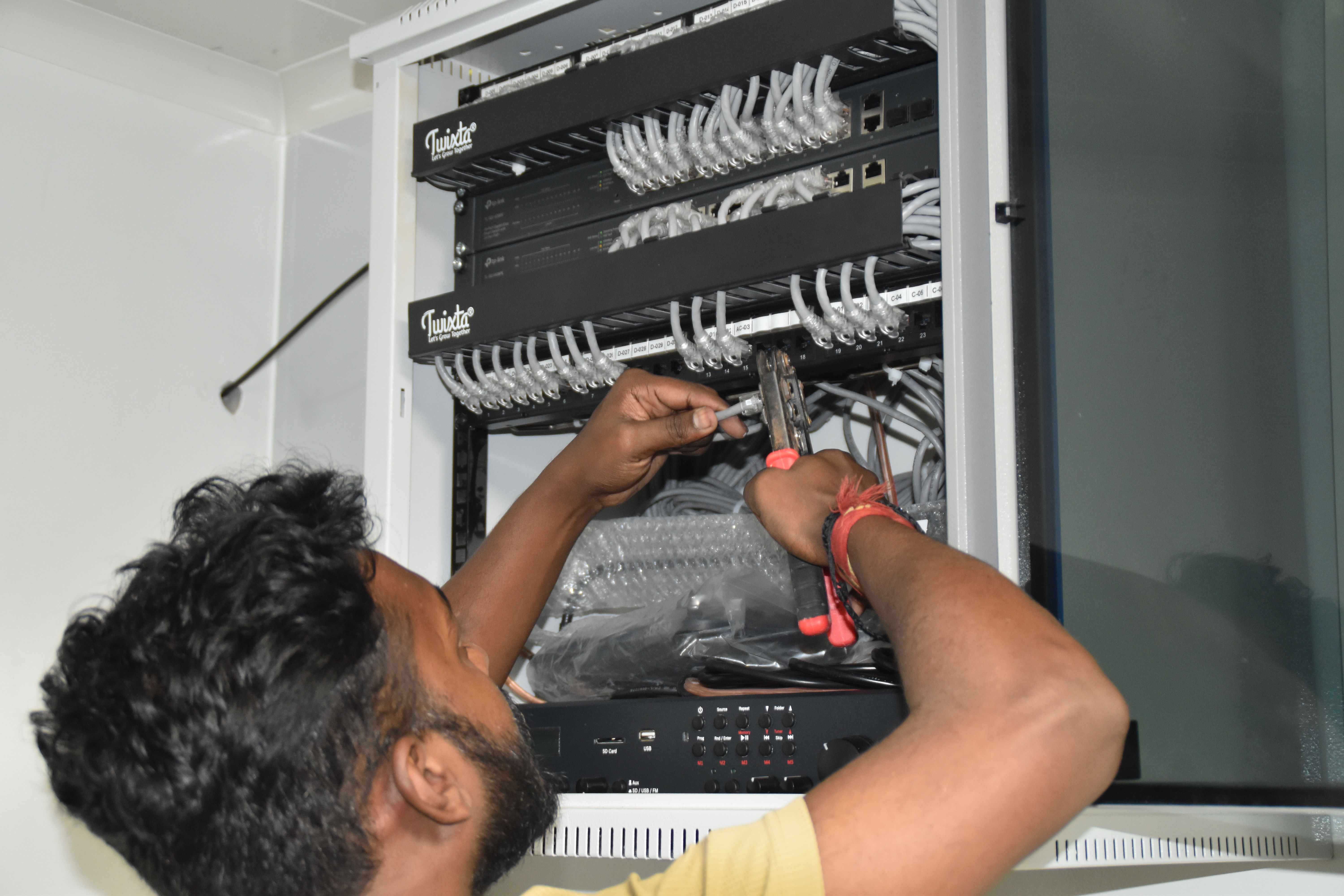
Resident IT engineer support — Yaas Technology Solutions, Karnataka

Enterprise WiFi deployment — Somerset Therapeutics, Karnataka
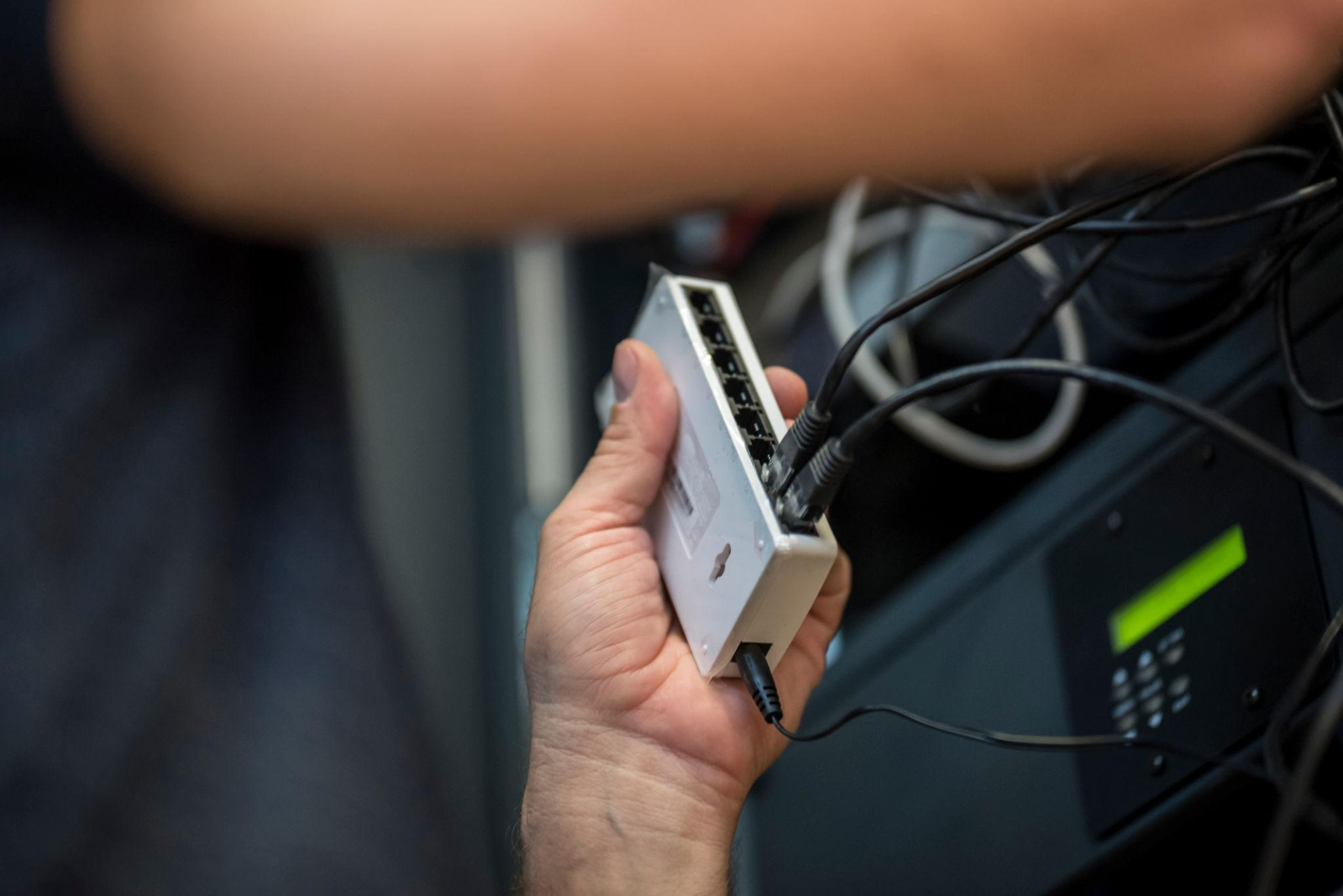
Structured cabling & CCTV infrastructure — Eriez, Tamil Nadu
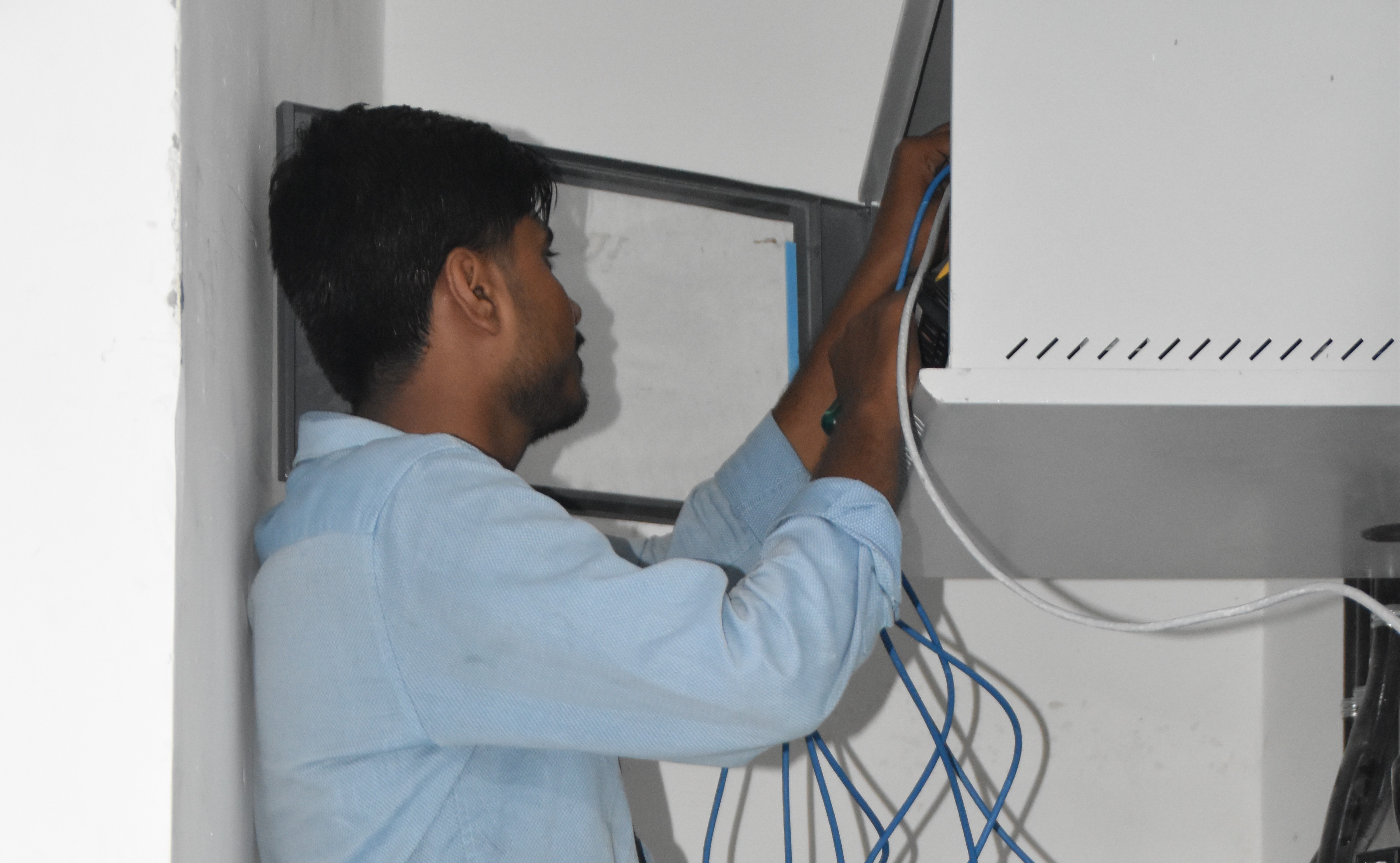
Break‑fix troubleshooting & stabilization — AEOS Labs, Karnataka
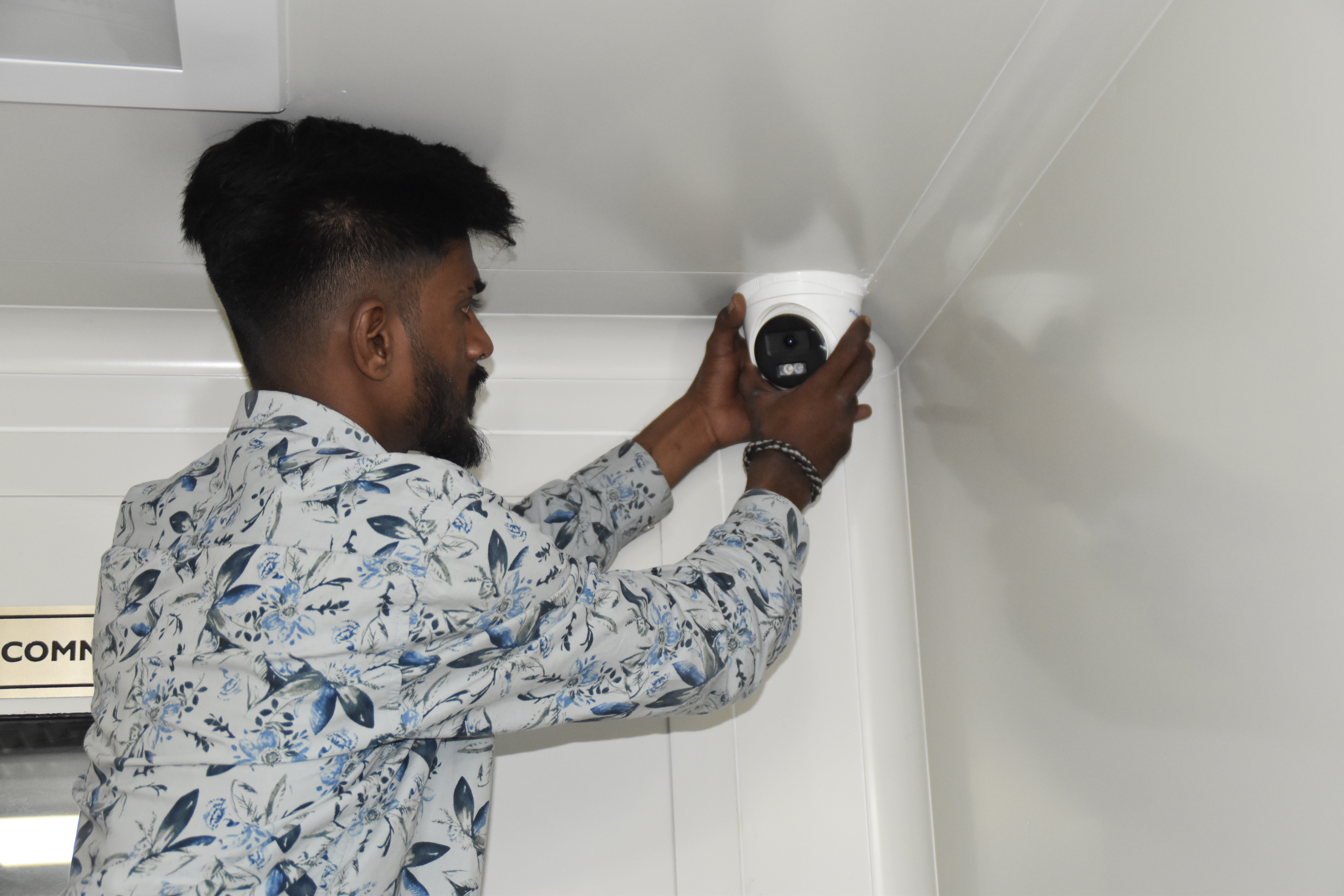
Healthcare network deployment — HCG Cancer Hospital Tower 6, Karnataka
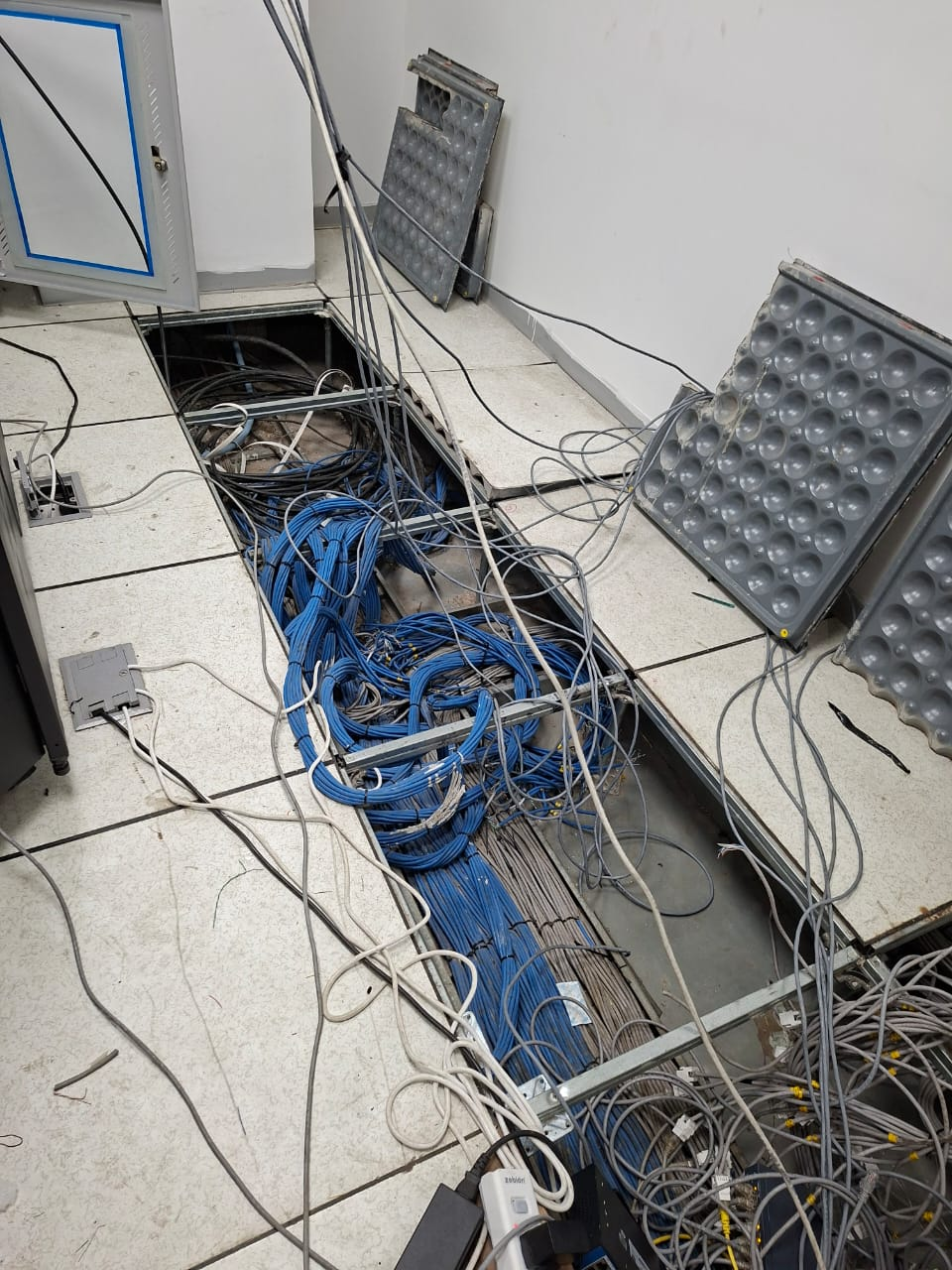
Enterprise infrastructure rollout — KRR Engineering Solutions, Tamil Nadu
25+ Enterprise Deployments Across South India
Ceiling, horn, column, line array – all delivered 100% in‑house.
Trusted Across Industries in India
Corporate Offices
Hospitals & Healthcare
Manufacturing & Industrial
Educational Institutions
Hotels & Hospitality
Government & Civic
Retail & Malls
Transport & Logistics
“Layerix designed and installed 120 ceiling speakers across our 3 office buildings. The acoustic modelling was spot‑on – uniform coverage and clear announcements. STI testing confirmed regulatory compliance.”
Facilities Manager
Corporate Office, Bengaluru
“Our factory needed 40 horn speakers to cut through high ambient noise. Layerix selected the right wattage and placement – now PA announcements are clear even on the shop floor. Professional and efficient.”
Plant Manager
Manufacturing Plant, Pune
Frequently Asked Questions
Everything you need to know about PA speaker systems.
How many ceiling speakers do I need per floor?+
The number of ceiling speakers depends on ceiling height, room size, and required SPL (sound pressure level). A standard rule: for 8‑10 ft ceilings, one 6‑8 watt speaker per 15‑20 sq.m. For higher ceilings, more powerful speakers or closer spacing is needed. Layerix provides exact counts during the site assessment using acoustic modelling software.
What is the difference between a ceiling speaker and a horn speaker?+
Ceiling speakers are flush‑mounted and provide wide, even coverage – ideal for offices, lobbies, and corridors. Horn speakers are directional, high‑output, and weatherproof – used for factories, warehouses, and outdoor areas where long‑throw and high volume are needed. Layerix recommends the right type based on environment and coverage requirements.
What SPL level do we need for a factory PA system?+
For factories and industrial environments, background noise is often 80‑90 dB(A). PA systems should achieve at least 10‑15 dB above background noise – typically 90‑105 dB(A) at ear level. Layerix measures ambient noise during the site survey and designs for the required SPL with a safety margin.
How do you calculate speaker coverage based on ceiling height?+
Speaker coverage is calculated based on the speaker's dispersion angle (e.g., 90° or 120°) and ceiling height. A typical 90° dispersion speaker at 3m ceiling covers approximately a 6m diameter circle. We use acoustic modelling software to map coverage, ensuring minimal gaps and overlap.
What is impedance mismatch and can it damage amplifiers?+
Impedance mismatch occurs when the total speaker load differs from the amplifier's rated output impedance (e.g., 100V line or 8Ω). In 100V line systems, mismatched tap settings can cause distortion or amplifier overload. Layerix calculates total load and taps speakers correctly to avoid mismatch and ensure reliable operation.
What is the difference between 100V line and low‑impedance speaker systems?+
100V line (high‑impedance) systems allow many speakers on long cable runs with individual tap settings – standard for PA and background music. Low‑impedance systems (4/8Ω) are used for high‑fidelity audio with shorter cable runs, such as in auditoriums or music venues. Layerix recommends the right system for each zone.
Our Success Stories
Real speaker deployments across India






Ready to Deploy Your PA Speaker System?
Book a speaker system assessment. Our acoustic engineers model your spaces, recommend the right speakers, and give you a fixed‑price proposal.
Response within 2 business hours · Pan‑India deployments · 100% in‑house team